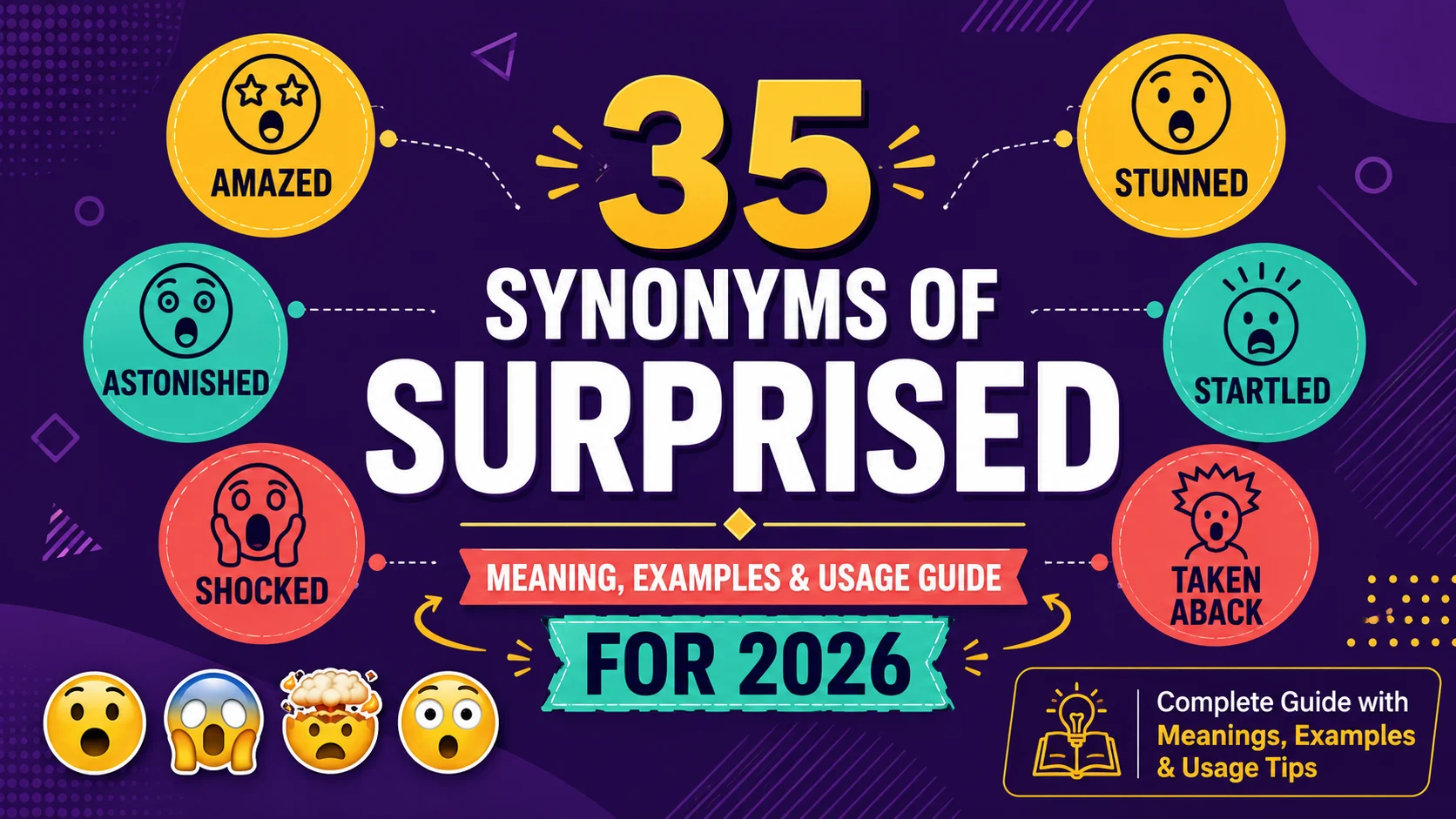
Surprised means feeling or showing unexpected wonder or amazement. The best synonyms include amazed, astonished, shocked, stunned, startled, dumbfounded, taken aback, and speechless. The most common everyday synonym is amazed, while astonished works well for stronger reactions. Each synonym has a slightly different meaning, tone, or context, so choose carefully based on your situation.
Top 10 Synonyms
- Amazed
- Astonished
- Shocked
- Stunned
- Startled
- Dumbfounded
- Taken aback
- Speechless
- Flabbergasted
- Bewildered
Every synonym has a slightly different meaning, tone, or context, so choose carefully based on your situation.
Do you always say “surprised” when something unexpected happens? It’s a useful word, but overusing it makes your writing and speaking sound repetitive.
Learning synonyms for “surprised” helps you express different degrees of surprise more precisely. Whether you’re describing a pleasant surprise, a shocking event, or a confusing moment, having the right word makes your English more natural and impressive.
In this guide, you’ll discover 35 powerful alternatives to “surprised.” You’ll learn their meanings, when to use them, and which ones native speakers prefer in different situations. Let’s begin!
What Does “Surprised” Mean?
Definition
Surprised means feeling or showing wonder because something unexpected has happened. It’s the emotional reaction you have when something happens that you didn’t expect.
In everyday terms, think of it as the feeling you get when someone jumps out and says “Boo!” or when you receive an unexpected gift. It’s that moment of “Wow, I didn’t see that coming!”
Surprised can describe:
- Pleasant surprises (“She was surprised by the birthday party”)
- Shocking events (“He was surprised by the bad news”)
- Mild wonder (“I was surprised by how easy it was”)
Pronunciation
| Feature | Value |
|---|---|
| US IPA | /sɚˈpraɪzd/ |
| UK IPA | /səˈpraɪzd/ |
| Syllables | 2 (sur-prised) |
| Tip | Stress the second syllable: sur-PRISED |
Grammar
| Grammar Feature | Information |
|---|---|
| Part of Speech | Adjective (past participle of “surprise”) |
| Common Position | Before a noun or after a linking verb |
| Typical Pattern | surprised + at/by + noun |
Example Sentences:
- “She was surprised by the unexpected visitor.”
- “I felt surprised when I saw the results.”
- “The surprised look on his face was priceless.”
Grammar Notes: “Surprised” is often used with the prepositions “at” or “by.” “Surprised at” is more common for reactions, while “surprised by” is more common for unexpected events.
Word Family
| Word | Part of Speech | Meaning |
|---|---|---|
| Surprise | Noun/Verb | An unexpected event / to cause wonder |
| Surprised | Adjective | Feeling wonder or amazement |
| Surprising | Adjective | Causing surprise |
| Surprisingly | Adverb | In a surprising way |
| Surprisedly | Adverb | In a surprised manner |
35 Synonyms of “Surprised”
1. Amazed
Meaning: Filled with great wonder or astonishment.
Best Used For: Everyday conversation, positive surprises, general use.
Formality: Neutral
Tone: Positive, Wonder
Frequency: ⭐⭐⭐⭐⭐ Very Common
CEFR Level: B1
Example Sentence 1: “I was amazed by her incredible talent.”
Example Sentence 2: “The magician’s performance left everyone amazed.”
Usage Tip: “Amazed” is the most common and natural synonym for “surprised.” Use it for both positive and neutral surprises. It suggests wonder rather than shock.
2. Astonished
Meaning: Greatly surprised or amazed; shocked.
Best Used For: Strong reactions, formal contexts, impressive events.
Formality: Formal
Tone: Strong, Impressed
Frequency: ⭐⭐⭐⭐ Common
CEFR Level: B2
Example Sentence 1: “The audience was astonished by her beautiful voice.”
Example Sentence 2: “He looked astonished when he won the award.”
Usage Tip: “Astonished” is stronger than “amazed.” Use it for genuinely impressive or shocking events. It’s more formal and suggests greater wonder.
3. Shocked
Meaning: Feeling sudden surprise, distress, or disgust.
Best Used For: Negative surprises, bad news, disturbing events.
Formality: Neutral
Tone: Negative, Intense
Frequency: ⭐⭐⭐⭐⭐ Very Common
CEFR Level: B1
Example Sentence 1: “She was shocked by the terrible news.”
Example Sentence 2: “The community was shocked by the crime.”
Usage Tip: “Shocked” often has a negative meaning. Use it for upsetting or disturbing surprises. It’s more intense than “surprised.”
4. Stunned
Meaning: So surprised that you cannot react or speak.
Best Used For: Extreme surprises, overwhelming news.
Formality: Neutral
Tone: Intense, Overwhelmed
Frequency: ⭐⭐⭐⭐ Common
CEFR Level: B2
Example Sentence 1: “He was stunned by the announcement.”
Example Sentence 2: “She stood stunned for a moment, unable to speak.”
Usage Tip: “Stunned” suggests being overwhelmed. Use it when surprise is so strong that you can’t react immediately. It’s like being emotionally “knocked out.”
5. Startled
Meaning: Suddenly surprised or slightly frightened.
Best Used For: Sudden noises, unexpected movements, mild fear.
Formality: Neutral
Tone: Sudden, Slightly Scared
Frequency: ⭐⭐⭐⭐ Common
CEFR Level: B2
Example Sentence 1: “The loud noise startled the cat.”
Example Sentence 2: “She was startled when her phone rang suddenly.”
Usage Tip: “Startled” is for sudden, brief surprises. It often involves a physical reaction like jumping. Use it for quick, unexpected events.
6. Dumbfounded
Meaning: So surprised that you cannot speak.
Best Used For: Extreme surprise, speechless reactions.
Formality: Neutral to Informal
Tone: Intense, Speechless
Frequency: ⭐⭐⭐ Moderate
CEFR Level: B2
Example Sentence 1: “The news left her dumbfounded.”
Example Sentence 2: “He stood dumbfounded, unable to form words.”
Usage Tip: “Dumbfounded” suggests being literally speechless. Use it for surprising news that makes it impossible to speak. It’s dramatic and vivid.
7. Taken aback
Meaning: Shocked or surprised by something unexpected.
Best Used For: Unexpected reactions, surprising comments.
Formality: Neutral
Tone: Surprised, Off-balance
Frequency: ⭐⭐⭐⭐ Common
CEFR Level: B2
Example Sentence 1: “I was taken aback by his rude comment.”
Example Sentence 2: “She was taken aback by the sudden question.”
Usage Tip: This phrase suggests being physically or emotionally “pushed back.” Use it when surprise makes you pause or step back.
8. Speechless
Meaning: Unable to speak because of strong emotion or surprise.
Best Used For: Strong emotions, overwhelming moments.
Formality: Neutral
Tone: Emotional, Intense
Frequency: ⭐⭐⭐⭐ Common
CEFR Level: B2
Example Sentence 1: “She was speechless with joy.”
Example Sentence 2: “The beautiful sunset left him speechless.”
Usage Tip: “Speechless” can be positive or negative. Use it when emotion is so strong that words fail.
9. Flabbergasted
Meaning: Greatly surprised and confused.
Best Used For: Strong, confusing surprises.
Formality: Informal
Tone: Dramatic, Stunned
Frequency: ⭐⭐⭐ Moderate
CEFR Level: B2
Example Sentence 1: “The news left him flabbergasted.”
Example Sentence 2: “I was flabbergasted by her sudden resignation.”
Usage Tip: “Flabbergasted” is a fun, dramatic word. Use it in informal contexts for strong, confusing surprises. It’s more colorful than “astonished.”
10. Bewildered
Meaning: Completely confused and surprised.
Best Used For: Confusing situations, not understanding what happened.
Formality: Neutral
Tone: Confused, Lost
Frequency: ⭐⭐⭐ Moderate
CEFR Level: B2
Example Sentence 1: “She looked bewildered by the complex instructions.
Example Sentence 2: “He was bewildered by the sudden change in plans.”
Usage Tip: “Bewildered” combines surprise with confusion. Use it when you don’t understand what just happened.
11. Thunderstruck
Meaning: Stunned and shocked as if hit by lightning.
Best Used For: Dramatic moments, extreme surprise.
Formality: Formal to Literary
Tone: Intense, Dramatic
Frequency: ⭐⭐ Rare
CEFR Level: C1
Example Sentence 1: “He stood thunderstruck by the news.”
Example Sentence 2: “The audience was thunderstruck by the revelation.”
Usage Tip: This is a literary, dramatic word. Use it for extreme surprise in creative writing or formal contexts.
12. Disconcerted
Meaning: Feeling surprised and confused.
Best Used For: Formal writing, slightly negative surprises.
Formality: Formal
Tone: Uncomfortable, Confused
Frequency: ⭐⭐⭐ Moderate
CEFR Level: C1
Example Sentence 1: “She felt disconcerted by his strange behavior.”
Example Sentence 2: “The unexpected question left him disconcerted.”
Usage Tip: “Disconcerted” suggests feeling uncomfortable or thrown off. Use it for surprises that make you uneasy.
13. Staggered
Meaning: Deeply shocked or surprised.
Best Used For: Shocking news, overwhelming events.
Formality: Neutral to Formal
Tone: Overwhelmed, Strong
Frequency: ⭐⭐⭐ Moderate
CEFR Level: B2
Example Sentence 1: “I was staggered by the cost of the repairs.
Example Sentence 2: “The team was staggered by the defeat.”
Usage Tip: “Staggered” suggests being so surprised you’re metaphorically “knocked off balance.” It’s strong and vivid.
14. Astounded
Meaning: Very surprised or shocked.
Best Used For: Strong impressions, impressive achievements.
Formality: Formal
Tone: Impressed, Shocked
Frequency: ⭐⭐⭐ Moderate
CEFR Level: B2
Example Sentence 1: “The doctor was astounded by his recovery.”
Example Sentence 2: “Her talent astounded everyone who watched.”
Usage Tip: “Astounded” is similar to “astonished” but can be slightly stronger. Use it for very impressive or shocking events.
15. Awestruck
Meaning: Filled with wonder and respect.
Best Used For: Beautiful things, impressive achievements.
Formality: Neutral
Tone: Positive, Respectful
Frequency: ⭐⭐⭐ Moderate
CEFR Level: B2
Example Sentence 1: “She was awestruck by the Grand Canyon.”
Example Sentence 2: “He stood awestruck in front of the painting.”
Usage Tip: “Awestruck” combines surprise with respect and admiration. Use it for inspiring, beautiful things.
16. Dazed
Meaning: Confused and unable to think clearly, often from surprise.
Best Used For: Sudden shocks, overwhelming news.
Formality: Neutral
Tone: Confused, Disoriented
Frequency: ⭐⭐⭐ Moderate
CEFR Level: B2
Example Sentence 1: “The news left him dazed.”
Example Sentence 2: “She walked away dazed by the experience.”
Usage Tip: “Dazed” suggests being mentally overwhelmed. Use it when surprise makes thinking difficult.
17. Perplexed
Meaning: Confused because you don’t understand something.
Best Used For: Puzzles, confusing situations.
Formality: Neutral
Tone: Confused, Puzzled
Frequency: ⭐⭐⭐⭐ Common
CEFR Level: B2
Example Sentence 1: “She looked perplexed by the riddle.”
Example Sentence 2: “He was perplexed by her strange behavior.”
Usage Tip: “Perplexed” emphasizes confusion more than surprise. Use it when you don’t understand what’s happening.
18. Nonplussed
Meaning: So surprised that you don’t know what to do.
Best Used For: Formal writing, strong confusion.
Formality: Formal
Tone: Confused, At a loss
Frequency: ⭐⭐⭐ Moderate
CEFR Level: C1
Example Sentence 1: “He was nonplussed by the request.”
Example Sentence 2: “The question left her nonplussed.”
Usage Tip: “Nonplussed” suggests being completely at a loss. Use it in formal contexts for strong confusion.
19. Shocked to the core
Meaning: Deeply and completely shocked.
Best Used For: Very upsetting news, devastating events.
Formality: Neutral
Tone: Intense, Emotional
Frequency: ⭐⭐⭐ Moderate
CEFR Level: B2
Example Sentence 1: “She was shocked to the core by the tragedy.”
Example Sentence 2: “The news shook him to his core.”
Usage Tip: This expression is for the strongest level of shock. Use it only for truly devastating events.
20. Flummoxed
Meaning: Completely confused and surprised.
Best Used For: Complex problems, confusing situations.
Formality: Informal
Tone: Confused, Amused
Frequency: ⭐⭐⭐ Moderate
CEFR Level: B2
Example Sentence 1: “The puzzle left him flummoxed.”
Example Sentence 2: “I was flummoxed by his explanation.”
Usage Tip: “Flummoxed” is a playful word for being confused. Use it in informal contexts for confusing surprises.
21. Taken by surprise
Meaning: Completely surprised by something unexpected.
Best Used For: General use, unexpected events.
Formality: Neutral
Tone: Surprised, Off-guard
Frequency: ⭐⭐⭐⭐⭐ Very Common
CEFR Level: B1
Example Sentence 1: “The storm caught us by surprise.”
Example Sentence 2: “The announcement took everyone by surprise.”
Usage Tip: This phrase means exactly what it says—something happens when you least expect it. Very natural and common.
22. Caught off guard
Meaning: Surprised when you weren’t prepared.
Best Used For: Unexpected questions, sudden events.
Formality: Neutral
Tone: Surprised, Unprepared
Frequency: ⭐⭐⭐⭐⭐ Very Common
CEFR Level: B2
Example Sentence 1: “Her question caught me off guard.”
Example Sentence 2: “The sudden announcement caught everyone off guard.”
Usage Tip: This phrase suggests you weren’t prepared for the surprise. Use it when you should have been ready but weren’t.
23. Open-mouthed
Meaning: Showing surprise by keeping your mouth open.
Best Used For: Visual surprise, strong reactions.
Formality: Informal
Tone: Stunned, Impressed
Frequency: ⭐⭐⭐ Moderate
CEFR Level: B2
Example Sentence 1: “He stared open-mouthed at the amazing view.”
Example Sentence 2: “The audience was open-mouthed with wonder.”
Usage Tip: This describes a physical reaction to surprise. Use it in descriptive writing.
24. Disarmed
Meaning: Surprised in a way that makes you less defensive.
Best Used For: Pleasant surprises, unexpected kindness.
Formality: Neutral
Tone: Positive, Relieved
Frequency: ⭐⭐⭐ Moderate
CEFR Level: B2
Example Sentence 1: “Her honesty disarmed him completely.”
Example Sentence 2: “The unexpected compliment disarmed her.”
Usage Tip: “Disarmed” is a positive kind of surprise. Use it when surprise makes you drop your defenses.
25. Took aback
Meaning: Surprised or shocked by something unexpected.
Best Used For: Unexpected comments, surprising actions.
Formality: Neutral
Tone: Surprised, Unprepared
Frequency: ⭐⭐⭐⭐ Common
CEFR Level: B2
Example Sentence 1: “His honesty took me aback.”
Example Sentence 2: “She was taken aback by his answer.”
Usage Tip: This phrase suggests being caught unprepared. It’s very natural and common.
26. Startled
Meaning: Surprised by something sudden.
Best Used For: Sudden noises, unexpected touches.
Formality: Neutral
Tone: Jumpy, Alert
Frequency: ⭐⭐⭐⭐ Common
CEFR Level: B2
Example Sentence 1: “The loud doorbell startled the dog.”
Example Sentence 2: “She startled when he tapped her shoulder.”
Usage Tip: This is for quick, sudden surprises that cause a physical reaction.
27. Surprised
Meaning: The original word—feeling unexpected wonder.
Best Used For: General use, all contexts.
Formality: Neutral
Tone: Neutral
Frequency: ⭐⭐⭐⭐⭐ Very Common
CEFR Level: A2
Example Sentence 1: “I was surprised to see him there.”
Example Sentence 2: “She gave me a surprised look.”
Usage Tip: This is the original word. Use it when you don’t need extra emphasis or nuance.
28. Confounded
Meaning: Confused and surprised.
Best Used For: Perplexing situations, strong confusion.
Formality: Formal
Tone: Confused, Bewildered
Frequency: ⭐⭐⭐ Moderate
CEFR Level: C1
Example Sentence 1: “The problem confounded everyone.”
Example Sentence 2: “She was confounded by the results.”
Usage Tip: “Confounded” combines surprise with being completely confused. It’s formal and strong.
29. Jolted
Meaning: Surprised in a sudden, shocking way.
Best Used For: Sudden shocks, unexpected news.
Formality: Neutral
Tone: Sudden, Intense
Frequency: ⭐⭐⭐ Moderate
CEFR Level: B2
Example Sentence 1: “The news jolted everyone in the room.”
Example Sentence 2: “The loud noise jolted him awake.”
Usage Tip: “Jolted” suggests a physical or emotional shock. Use it for sudden, jarring surprises.
30. Put out
Meaning: Annoyed or offended by something unexpected.
Best Used For: Negative surprises, slight offense.
Formality: Neutral
Tone: Negative, Annoyed
Frequency: ⭐⭐⭐ Moderate
CEFR Level: B2
Example Sentence 1: “He was put out by her thoughtless comment.”
Example Sentence 2: “She felt put out by the sudden change.”
Usage Tip: This phrase suggests mild annoyance or inconvenience. Use it for small, negative surprises.
31. Thrilled
Meaning: Extremely pleased and surprised.
Best Used For: Very positive surprises, exciting news.
Formality: Neutral
Tone: Positive, Excited
Frequency: ⭐⭐⭐⭐ Common
CEFR Level: B1
Example Sentence 1: “She was thrilled by the surprise party.”
Example Sentence 2: “He was thrilled to receive the promotion.”
Usage Tip: “Thrilled” is positive and exciting. Use it for very happy surprises.
32. Delighted
Meaning: Very pleased and satisfied.
Best Used For: Pleasant surprises, good news.
Formality: Neutral
Tone: Positive, Happy
Frequency: ⭐⭐⭐⭐ Common
CEFR Level: B1
Example Sentence 1: “We were delighted by the wonderful gift.”
Example Sentence 2: “She was delighted with the results.”
Usage Tip: “Delighted” suggests pure happiness. Use it for pleasant surprises only.
33. Baffled
Meaning: Completely confused and surprised.
Best Used For: Puzzles, confusing situations.
Formality: Neutral
Tone: Confused, Puzzled
Frequency: ⭐⭐⭐⭐ Common
CEFR Level: B2
Example Sentence 1: “The mysterious disappearance baffled the police.”
Example Sentence 2: “I was baffled by his strange behavior.”
Usage Tip: “Baffled” emphasizes confusion. Use it when surprise is mixed with not understanding.
34. Upset
Meaning: Surprised in a negative, unhappy way.
Best Used For: Bad news, disappointing surprises.
Formality: Neutral
Tone: Negative, Sad
Frequency: ⭐⭐⭐⭐⭐ Very Common
CEFR Level: A2
Example Sentence 1: “She was upset by the terrible news.”
Example Sentence 2: “The changes upset everyone on the team.”
Usage Tip: “Upset” suggests sadness or disappointment. Use it for negative surprises.
35. Dumbstruck
Meaning: Unable to speak because of surprise.
Best Used For: Extreme surprise, speechless moments.
Formality: Neutral
Tone: Intense, Speechless
Frequency: ⭐⭐⭐ Moderate
CEFR Level: B2
Example Sentence 1: “She stood dumbstruck by the amazing view.”
Example Sentence 2: “The announcement left him dumbstruck.”
Usage Tip: “Dumbstruck” suggests being so surprised that you can’t speak. It’s similar to “dumbfounded” but slightly more formal.
Synonyms Comparison Table
| Synonym | Best Context | Formality | Tone | Frequency |
|---|---|---|---|---|
| Amazed | Positive surprises | Neutral | Wonder | ⭐⭐⭐⭐⭐ |
| Astonished | Strong reactions | Formal | Impressed | ⭐⭐⭐⭐ |
| Shocked | Negative surprises | Neutral | Intense | ⭐⭐⭐⭐⭐ |
| Stunned | Extreme surprise | Neutral | Overwhelmed | ⭐⭐⭐⭐ |
| Startled | Sudden events | Neutral | Sudden | ⭐⭐⭐⭐ |
| Dumbfounded | Speechless reaction | Neutral | Intense | ⭐⭐⭐ |
| Taken aback | Unexpected comments | Neutral | Off-balance | ⭐⭐⭐⭐ |
| Speechless | Emotional moments | Neutral | Emotional | ⭐⭐⭐⭐ |
| Flabbergasted | Dramatic surprise | Informal | Dramatic | ⭐⭐⭐ |
| Bewildered | Confusing events | Neutral | Confused | ⭐⭐⭐ |
Best Synonyms by Situation
| Situation | Best Synonym | Why It Works |
|---|---|---|
| Positive Surprise | Amazed, Astonished | Positive and impressed |
| Negative Surprise | Shocked, Upset | Shows distress |
| Sudden Event | Startled, Jolted | Quick and physical |
| Confusing Situation | Bewildered, Perplexed | Shows confusion |
| Speechless Reaction | Dumbfounded, Speechless | Strong and vivid |
| Formal Writing | Astonished, Disconcerted | Professional tone |
| Daily Conversation | Surprised, Amazed | Natural and easy |
| Creative Writing | Thunderstruck, Awestruck | Vivid and literary |
| Social Media | Shocked, Flabbergasted | Engaging and dramatic |
| Movie Review | Stunned, Speechless | Describes strong reaction |
Formal vs Informal Synonyms
Formal Alternatives
| Synonym | Best Used For |
|---|---|
| Astonished | Impressive events |
| Disconcerted | Uncomfortable surprises |
| Nonplussed | Strong confusion |
| Confounded | Perplexing situations |
| Astounded | Very impressive events |
Neutral Alternatives
| Synonym | Best Used For |
|---|---|
| Surprised | Most situations |
| Amazed | Wonder and amazement |
| Shocked | Negative surprises |
| Stunned | Extreme surprise |
| Taken aback | Unexpected events |
Informal Alternatives
| Synonym | Best Used For |
|---|---|
| Flabbergasted | Dramatic surprises |
| Flummoxed | Confusing situations |
| Open-mouthed | Visual surprise |
| Dumbfounded | Speechless reaction |
When to choose each level: Use formal synonyms for academic writing and professional contexts. Use neutral synonyms for everyday writing and most situations. Use informal synonyms with friends and in casual contexts.
Strong vs Mild Synonyms
Mild (Everyday Situations)
- Surprised
- Amazed
- Startled
- Taken aback
- Delighted
Moderate (More Expressive)
- Astonished
- Stunned
- Bewildered
- Perplexed
- Speechless
Strong (High-Intensity)
- Flabbergasted
- Dumbfounded
- Thunderstruck
- Shocked to the core
- Staggered
Remember: Stronger doesn’t always mean better. “Flabbergasted” sounds dramatic but might be too strong for a small surprise. Choose the intensity that matches your situation.
Real-Life Examples
In the Office
“She was astonished by the promotion announcement.”
Daily Conversation
“I was amazed by how well you performed.”
In a Business Email
“The team was surprised by the sudden change in leadership.”
On Social Media
“Just shocked by this incredible news! 😱”
In a Movie Review
“The ending left me speechless for minutes.”
In Academic Writing
“The researchers were perplexed by the unexpected results.”
In Creative Writing
“She stood thunderstruck, unable to process what she had witnessed.”
During a Presentation
“The audience was stunned by the CEO’s announcement.”
Common Collocations
| Common Phrase | Better Alternative |
|---|---|
| Very surprised | Completely astonished |
| Really shocked | Deeply shocked |
| Slightly surprised | Mildly surprised |
| Pleasant surprise | Delightful surprise |
| Shocking news | Devastating news |
| Surprised look | Stunned expression |
Common Phrases
- “Catch someone off guard” – Meaning: Surprise someone who was unprepared.
- “Take someone by surprise” – Meaning: Completely surprise someone.
- “Jump out of one’s skin” – Meaning: Be very startled.
- “Not see something coming” – Meaning: Be completely surprised by something.
Context Guide
| Situation | Best Synonym | Reason |
|---|---|---|
| Essay | Astonished, Perplexed | Formal and academic |
| Speech | Stunned, Speechless | Dramatic and engaging |
| Business Email | Surprised, Amazed | Professional and clear |
| Novel | Thunderstruck, Awestruck | Literary and descriptive |
| Presentation | Stunned, Astonished | Strong and impressive |
| Conversation | Amazed, Shocked | Natural and easy |
| Academic Writing | Baffled, Perplexed | Precise and scholarly |
| Marketing Copy | Delighted, Thrilled | Positive and persuasive |
Related Words
Near Synonyms
- Amazed: Filled with wonder
- Astonished: Greatly surprised
- Shocked: Suddenly surprised
- Stunned: Unable to react
Antonyms
- Unsurprised: Not surprised
- Expectant: Expecting something
- Prepared: Ready for something
- Unimpressed: Not impressed
Related Adjectives
- Surprising: Causing surprise
- Unexpected: Not expected
- Amazing: Causing great wonder
- Shocking: Causing strong surprise
Related Nouns
- Surprise: An unexpected event
- Shock: A strong surprise
- Wonder: A feeling of amazement
- Awe: A feeling of wonder
Related Verbs
- Surprise: To cause wonder
- Amaze: To fill with wonder
- Astonish: To greatly surprise
- Startle: To surprise suddenly
Frequently Asked Questions
What is another word for surprised?
The best alternatives are amazed, astonished, shocked, stunned, startled, dumbfounded, taken aback, and speechless. The most common everyday synonym is amazed, while shocked works best for negative surprises. Your choice depends on the intensity and tone of the surprise.
Which synonym sounds the most professional?
Astonished, perplexed, and disconcerted sound the most professional. These words appear in formal writing and professional contexts. Astonished suggests strong positive surprise, while perplexed suggests confusion.
What is the strongest synonym for surprised?
Flabbergasted, thunderstruck, and shocked to the core are among the strongest alternatives. They suggest extreme, overwhelming surprise. Use them carefully as they can sound dramatic.
Which synonym is best for essays?
Astonished, perplexed, and startled work best in academic essays. They’re formal enough for academic writing while remaining clear and accessible. Avoid informal alternatives like flabbergasted in formal writing.
What’s the difference between surprised and amazed?
Surprised is a general reaction to something unexpected. Amazed suggests wonder and admiration, not just surprise. You can be surprised by a loud noise, but you’d be amazed by a beautiful performance.
Which synonym is most common in everyday English?
Amazed is the most common everyday synonym, followed by shocked. Native speakers use these words constantly in conversation. They’re natural, clear, and work in almost any context.
What is the opposite of surprised?
The most common opposites are unsurprised, expectant, prepared, and unimpressed. These words describe situations where someone was not caught off guard.
Is “flabbergasted” a real word?
Yes, “flabbergasted” is a real word meaning greatly surprised or shocked. It’s considered informal and somewhat humorous. Native speakers use it for dramatic, fun descriptions of surprise.
Conclusion
Learning alternatives to “surprised” helps you express the exact kind of surprise you feel. The right word depends on your context, audience, and the intensity of the surprise.
For everyday situations, amazed and shocked are your safest choices. They’re natural, clear, and work in almost any context. For positive surprises, delighted and thrilled are excellent choices. For extreme surprises, dumbfounded, flabbergasted, or stunned will do the job.
Remember these key principles:
- Positive surprises: Use amazed, astonished, or thrilled
- Negative surprises: Use shocked, upset, or stunned
- Sudden surprises: Use startled or jolted
- Confusing surprises: Use bewildered or perplexed
The more you practice using these alternatives, the more natural they’ll become. Start by replacing one or two uses of “surprised” in your next conversation or email. You’ll sound more impressive in no time!
