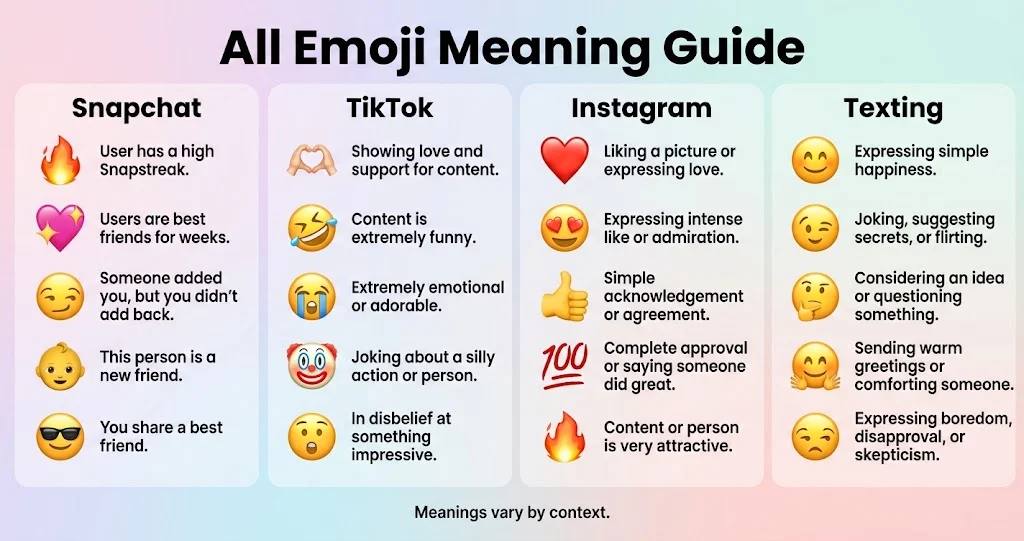
All emoji meaning refers to the widely accepted interpretations of emoji symbols across digital platforms. For example, the skull emoji signifies laughter. Meanwhile, the pleading face conveys admiration or desperation. However, context shapes every interpretation. Consequently, one emoji can carry multiple meanings depending on the platform and conversation.
Understanding all emoji meaning has become essential for anyone navigating modern digital communication. Emojis now function as a universal language. Furthermore, they bridge cultural gaps and convey emotions that text alone cannot express. However, the same symbol can mean something completely different across platforms. For instance, a simple smile might signal warmth on one app but passive aggression on another. Therefore, this guide breaks down every major emoji category, platform specific usage, and real conversation examples. Consequently, you will never misread or misuse an emoji again.
Quick Answer Box
| Meaning | Context | Primary Platforms | Example | Tone |
|---|---|---|---|---|
| Laughter, sarcasm, flirtation, agreement | Varies by symbol and platform | Snapchat, TikTok, Instagram, iMessage, WhatsApp | Skull emoji means dying of laughter | Playful to serious |
| Emotional state, reaction, emphasis | Depends on relationship and chat history | All social and messaging apps | Heart emoji shows affection | Warm to neutral |
| Cultural reference, trend signal | Tied to internet culture and generational slang | TikTok, Twitter, Instagram | Fire emoji means something is excellent | Enthusiastic |
What Does All Emoji Meaning Mean?
The phrase all emoji meaning describes the collective interpretations assigned to emoji symbols across digital communication. Consequently, it encompasses literal definitions, slang usages, and platform specific nuances. The concept emerged alongside the rise of emoji keyboards in the early 2010s. However, its importance exploded when platforms like Snapchat and TikTok introduced unique emoji based features.
Furthermore, emoji meaning is not static. For example, the eggplant emoji once simply represented a vegetable. Now, it carries a widely understood suggestive connotation. Similarly, the skull emoji evolved from representing death to signaling uncontrollable laughter. Therefore, understanding all emoji meaning requires recognizing both traditional and modern interpretations.
Additionally, Unicode Consortium standardizes emoji designs. However, each platform applies its own artistic style. Consequently, the same emoji can look different on Apple versus Android devices. This visual variation sometimes creates confusion in cross platform conversations.
Contextual Dynamics and Nuances of the Term
Context dictates emoji interpretation more than any dictionary definition. For example, a crying face emoji after a joke signals laughter. However, the same emoji after bad news signals genuine sadness. Therefore, reading the surrounding text is critical.
Furthermore, relationship dynamics influence meaning. For instance, a heart emoji from a close friend feels warm. Meanwhile, the same heart from a casual acquaintance might feel overly familiar. Consequently, users must gauge their audience before sending certain symbols.
Additionally, generational differences shape interpretation. For example, younger users often assign ironic meanings to positive emojis. Meanwhile, older users typically interpret them literally. This gap creates frequent misunderstandings in family group chats.
Platform culture also matters. For instance, Snapchat uses emojis as status indicators next to usernames. However, TikTok uses emojis primarily for engagement and trend signaling. Therefore, the same symbol can serve completely different functions depending on where you send it.
Real Life Conversation Examples Using All Emoji Meaning
Example 1: Skull Emoji After a Joke
User A: I told my boss I was working from home but I was actually at the beach.
User B: 💀💀💀
User A: He saw my Instagram story.
User B: 💀 You are finished.
In this exchange, the skull emoji signals intense laughter. Furthermore, repeating it emphasizes how funny the situation is.
Example 2: Pleading Face for a Favor
User A: Can you cover my shift Saturday?
User B: 🥺
User A: I will owe you forever.
User B: Fine but you are buying coffee for a month.
Here, the pleading face conveys desperation and cuteness. Consequently, it softens the request.
Example 3: Fire Emoji for Approval
User A: Just finished my first painting.
User B: 🔥🔥🔥
User A: Really? I was nervous about it.
User B: Seriously that is amazing.
The fire emoji communicates strong approval. Additionally, stacking it amplifies enthusiasm.
Example 4: Side Eye Emoji for Skepticism
User A: I only had one slice of cake.
User B: 👀
User A: Okay maybe three.
User B: Exactly.
The eyes emoji signals suspicion or disbelief. Therefore, it prompts honesty.
Example 5: Sparkle Heart for Affection
User A: Goodnight love.
User B: 💖
User A: Sweet dreams.
User B: You too 💖
The sparkling heart conveys romantic warmth. Furthermore, it adds a playful sparkle to ordinary affection.
Platform Specific Breakdown
How It Is Used on Snapchat
Snapchat assigns unique emoji meanings to friend statuses. For example, the yellow heart indicates a number one best friend. Meanwhile, the pink hearts represent a two month streak. Furthermore, the fire emoji tracks consecutive snap streaks.
Additionally, Snapchat uses emojis as achievement badges. For instance, the baby emoji appears when a new friend joins. Similarly, the birthday cake emoji automatically appears on a friend’s special day. Consequently, Snapchat users must learn this separate emoji vocabulary.
Moreover, misunderstanding these status emojis can cause social drama. For example, losing the yellow heart after a streak break often upsets close friends. Therefore, Snapchat’s emoji system adds emotional weight to digital interactions.
The Role of All Emoji Meaning on TikTok
TikTok culture drives some of the fastest emoji evolution. For example, the crying laughing emoji replaced the skull emoji in many comment sections. However, the skull returned as a Gen Z favorite. Consequently, trends shift rapidly.
Furthermore, TikTok creators use emojis in captions to boost engagement. For instance, the red heart, fire, and pleading face appear constantly in comment replies. Additionally, the nail polish emoji signals sass or dismissal. Meanwhile, the clown emoji implies someone is acting foolishly.
TikTok also popularized ironic emoji usage. For example, sending a smiling face after a rude comment signals sarcasm. Therefore, context and tone matter enormously on this platform.
Instagram and Texting Dynamics
Instagram blends visual content with emoji heavy captions. For example, the red heart dominates romantic posts. Meanwhile, the folded hands emoji signals gratitude or prayer. Furthermore, the crying face often conveys overwhelming emotion rather than sadness.
In direct messages, Instagram users rely on emojis for quick reactions. For instance, the fire emoji responds to a good photo. Similarly, the heart react function simplifies affectionate replies. Consequently, full sentences sometimes become unnecessary.
Texting via iMessage and WhatsApp follows similar patterns. For example, the thumbs up confirms agreement. However, younger users sometimes interpret it as passive aggressive. Therefore, generational context remains essential for accurate interpretation.
Alternative Meanings
Natural language processing systems treat emojis as sentiment tokens. For example, researchers classify the red heart as positive sentiment. Meanwhile, the crying face registers as negative. However, sarcastic usage confuses these algorithms. Consequently, AI models continue improving contextual emoji analysis.
Furthermore, emoji meaning varies by region. For example, the folded hands emoji reads as prayer in Western cultures. However, it simply means please or thank you in Japanese texting. Similarly, the thumbs up offends in some Middle Eastern contexts. Therefore, cultural awareness matters.
Additionally, some emojis carry dual meanings simultaneously. For instance, the peach emoji represents both fruit and a body part. Meanwhile, the sweat droplets emoji can indicate workout effort or embarrassment. Consequently, users rely on surrounding text for clarity.
Search queries also reflect these variations. People commonly ask about specific emoji combinations. For example, questions like what does the skull emoji mean from a girl appear frequently. Additionally, queries about emoji meanings from a crush reveal anxiety about romantic signals. Therefore, emotional context drives much of the search interest.
Misinterpretations:
Certain situations demand caution. For example, avoid suggestive emojis in professional settings. Additionally, never send the eggplant or peach emoji to colleagues. Consequently, misunderstandings could damage your reputation.
Furthermore, skip emojis entirely during serious conversations. For instance, sending a smiley face after discussing a tragedy appears insensitive. Meanwhile, using laughing emojis during an argument escalates tension. Therefore, read the emotional temperature first.
Also, be careful with ambiguous emojis across generations. For example, the thumbs up feels friendly to older users. However, younger recipients may perceive it as dismissive. Similarly, the OK hand gesture carries negative connotations in some communities. Consequently, when in doubt, use words instead.
Finally, avoid overloading messages with emojis in formal contexts. For instance, job applications and business emails should remain emoji free. Additionally, academic writing never includes emojis. Therefore, reserve them for casual communication.
How to Respond in Chat Comfortably
Responding to emojis requires reading the room. First, mirror the sender’s energy. For example, if they send a single heart, reply with one heart. However, if they send multiple fire emojis, match that enthusiasm.
Furthermore, ask for clarification when unsure. For instance, a simple what do you mean by that works fine. Additionally, never assume romantic intent without other signals. Consequently, honest communication prevents awkwardness.
You can also use emojis to set boundaries playfully. For example, the upside down smile softens a disagreement. Meanwhile, the peace sign closes a conversation politely. Therefore, emojis can manage tone effectively.
Finally, pay attention to frequency. For instance, constant heart emojis suggest growing affection. However, sudden emoji withdrawal might signal disinterest. Consequently, patterns matter more than isolated symbols.
FAQs
What does the skull emoji mean from a girl?
The skull emoji from a girl typically means she is laughing extremely hard. Furthermore, it signals that something is hilarious. However, if sent alone without context, it might express exhaustion. Therefore, check the surrounding conversation for clarity.
What does the pleading face emoji mean from a guy?
The pleading face from a guy usually conveys desperation or a request. For example, he might want a favor or attention. Additionally, it can express genuine admiration. Consequently, the context determines whether it is playful or serious.
What does all emoji meaning include for heart colors?
Heart colors carry distinct meanings. For example, the red heart signals romantic love. Meanwhile, the yellow heart represents friendship. Furthermore, the purple heart shows compassion. Consequently, choosing the right color matters.
What does the eyes emoji mean in texting?
The eyes emoji signals suspicion, interest, or surprise. For example, it often means I see what you did there. Additionally, it can express attraction. Therefore, tone depends on the conversation.
What does the fire emoji mean from a crush?
The fire emoji from a crush usually means strong approval or attraction. Furthermore, it compliments something you said or shared. However, it does not always confirm romantic feelings. Consequently, look for additional signals.
What does all emoji meaning say about the crying face?
The crying face carries dual meanings. For example, it expresses genuine sadness in serious contexts. However, it also signals laughter in playful conversations. Therefore, context is everything.
What does the clown emoji mean?
The clown emoji implies someone is acting foolishly. Furthermore, it often appears in arguments. Additionally, it can be self deprecating. Consequently, use it carefully.
What does the sparkle heart emoji mean?
The sparkle heart conveys romantic affection with a playful twist. For example, it appears in flirty texts. Meanwhile, it also expresses gratitude warmly. Therefore, it works in both romantic and friendly contexts.
What does the upside down smile mean?
The upside down smile signals passive aggression or hidden frustration. For example, it often appears when someone is annoyed but pretending otherwise. Additionally, it can be sarcastic. Consequently, tread carefully when you see it.
What does the nail polish emoji mean?
The nail polish emoji signals sass, confidence, or dismissal. For example, it often follows a shady comment. Furthermore, it conveys a not bothered attitude. Therefore, it fits playful banter best.
Conclusion:
Emojis have transformed from simple pictographs into a sophisticated communication layer. Consequently, understanding all emoji meaning empowers you to navigate every platform confidently. Furthermore, context, culture, and platform norms shape every interpretation. Therefore, stay curious and observe how your friends use these symbols.
Additionally, emoji meanings will keep evolving. For example, new generations will assign fresh interpretations to old symbols. Meanwhile, platforms will introduce exclusive emoji features. However, the core principle remains unchanged. Specifically, emojis enhance emotional expression when used thoughtfully.
Finally, use this guide as your reference. Consequently, you will avoid awkward misunderstandings. Furthermore, you will respond with confidence in every chat. Therefore, embrace the language of emojis and communicate more effectively starting today.
