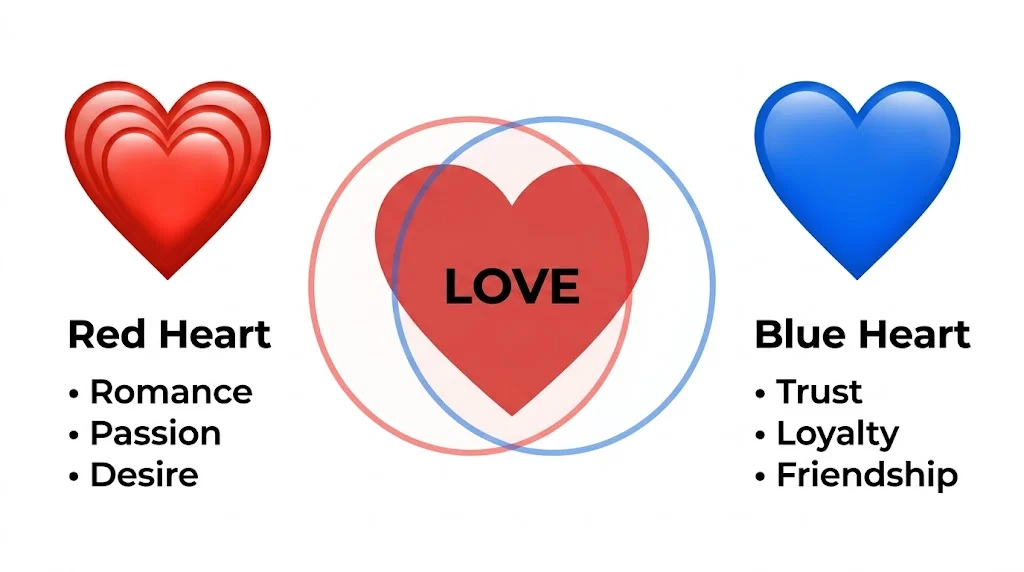
The blue heart emoji (💙) primarily symbolizes trust, loyalty, and deep friendship. Unlike the romantic red heart, the blue heart conveys platonic love, support, and a calming sense of security. Consequently, users often send it to close friends or family members to show appreciation without romantic intent.
The blue heart emoji meaning revolves around trust, loyalty, and deep platonic affection. However, many people confuse it with romantic intent. You might see it pop up in a text from a close friend or a supportive coworker. Furthermore, this symbol has carved out a unique niche in digital culture. It represents a bond that is strong yet calm. Therefore, understanding its specific context is crucial for modern communication.
Quick Answer Box:
| Meaning | Context | Primary Platforms | Example | Tone |
|---|---|---|---|---|
| Trust and Loyalty | Platonic friendship, support | Snapchat, TikTok, iMessage | “I got your back 💙” | Calm, supportive |
| Deep Friendship | Close bonds without romance | Instagram, WhatsApp | “Miss you tons 💙” | Warm, affectionate |
| Branding | Corporate or sports teams | Twitter, Facebook | “Go team 💙” | Professional, loyal |
What Does Blue Heart Emoji Meaning Mean?
The primary definition of this symbol centers on emotional stability and reliability. Additionally, it conveys a sense of peace and calmness. For example, you might send it to someone who needs comfort during a stressful time. In contrast, the red heart represents fiery passion. Subsequently, the blue heart offers a gentler alternative. It says, “I am here for you,” without the pressure of romance. Moreover, this emoji often signifies a brotherly or sisterly love. It is a versatile tool for expressing gratitude and steadfast support.
The Unicode Consortium approved the blue heart in 2010. Since then, its usage has skyrocketed. Initially, people used it to represent the color blue. However, digital natives quickly assigned emotional value to it. Today, it ranks among the most popular heart colors. Consequently, it has become a staple in the visual language of the internet.
Contextual Dynamics & Nuances of the Term
Context dictates everything when using this symbol. For instance, sending a blue heart to a romantic partner might feel distant. They might wonder why you did not use a red heart. Conversely, sending a red heart to a strict coworker could feel inappropriate. Therefore, the blue heart strikes the perfect balance. It shows care without crossing professional boundaries.
Furthermore, the frequency of use matters. Sending one blue heart might be casual. However, sending a stream of blue hearts implies deep gratitude. You might use it after someone helps you move. Or, you might use it when a friend listens to your problems. Consequently, the symbol becomes a digital hug. It wraps the recipient in a feeling of safety and acceptance.
Cultural differences also play a role. In Western cultures, blue often represents boys. Therefore, some parents use the blue heart to refer to their sons. However, this is not a strict rule. Many people use it regardless of gender. It simply represents the emotion of loyalty. As a result, its meaning is fluid and adaptable. It shifts based on who is sending it and why.
Real-Life Conversation Examples Using Blue Heart Emoji Meaning
Scenario 1: Supporting a Friend
- Alex: “I am so stressed about this exam tomorrow.”
- Jordan: “You have studied hard. You are going to do great! 💙”
- Alex: “Thanks, I really needed to hear that.”
Scenario 2: Confirming Plans
- Sam: “Are we still on for dinner at 7?”
- Riley: “Absolutely. I will be there. 💙”
- Sam: “Perfect. See you soon.”
Scenario 3: Expressing Platonic Love
- Casey: “Happy Birthday! I am so glad we are friends.”
- Taylor: “Thank you! You are the best. 💙”
Scenario 4: Showing Team Spirit
- Coach: “Great game today, everyone.”
- Player: “Thanks, Coach! We played hard. 💙”
Scenario 5: Comforting a Partner
- Morgan: “I had a terrible day at work.”
- Jamie: “I am sorry, honey. I am here for you. 💙”
- Morgan: “I love you.”
Platform-Specific Breakdown
Different apps foster unique ways to use this symbol. Therefore, you must adapt your usage to the platform.
How It Is Used on Snapchat
Snapchat relies heavily on emojis for quick communication. You might see the blue heart next to a friend’s name. Specifically, it appears next to your “Best Friend” in the friend emoji system. However, this specific placement denotes a specific ranking. It means you snap this person more than anyone else. Consequently, it acts as a digital badge of honor for your closest connections.
Furthermore, users on Snapchat use this symbol to react to photos. If a friend sends a funny picture, a blue heart reply shows appreciation. It is a fast way to say, “I liked that,” without typing a full message.
The Role of Blue Heart Emoji Meaning on TikTok
TikTok is a hub for trends and aesthetic content. Here, the blue heart often appears in captions and comments. Creators use it to signal a specific vibe. For example, a video with a calming aesthetic might use a blue heart. Additionally, fans use it to show loyalty to a specific creator.
Sometimes, TikTok users use it to represent a “soft” or “calm” boyfriend or girlfriend. In this context, it contrasts with the “red flag” emoji. Therefore, a blue heart implies a “green flag” or safe partner. It has become a symbol of healthy relationships and emotional maturity.
Instagram and Texting Dynamics
On Instagram, the blue heart often lives in the comments section. It serves as a supportive gesture. You might comment a blue heart on a friend’s selfie. It means, “I support you,” without the romantic undertones of a red heart.
In regular SMS texting, the meaning depends entirely on your relationship. If your partner sends it, it likely means “calm love.” If a friend sends it, it means “loyalty.” Consequently, you must read the context of the conversation. If the conversation is serious, the blue heart offers comfort. If the conversation is casual, it represents a solid bond.
Alternative Meanings
Language is constantly evolving. Therefore, the blue heart has acquired several alternative meanings. People often use it to represent the “blue lives matter” movement. However, this is a specific political context. You should use caution with this interpretation.
Additionally, sports fans use it to support teams with blue colors. For example, fans of the Dallas Cowboys or the New York Yankees might use it. Consequently, it becomes a symbol of sports loyalty.
In the realm of mental health, the blue heart represents calmness and peace. Some people use it during Autism Acceptance Month. It symbolizes support for neurodiversity. Furthermore, it can simply represent the color blue in aesthetics. For instance, a user posting a photo of the ocean might caption it with a blue heart. Therefore, the symbol is highly versatile.
Misinterpretations:
You must exercise caution in romantic settings. If you are in a new relationship, a blue heart might send mixed signals. Your partner might think you are pulling away. Consequently, they might feel insecure about your affection. Stick to red hearts for clear romance.
Furthermore, do not use it in formal business emails. Emojis generally have no place in professional correspondence. However, in a casual Slack channel with coworkers, a blue heart might be acceptable. It shows team solidarity. Nevertheless, you should gauge the company culture first.
Additionally, avoid using it to express anger or jealousy. The blue heart represents calmness. If you send it during an argument, it might look passive-aggressive. For example, sending “Fine 💙” looks sarcastic. In this case, words work better than emojis. Always ensure your tone matches the symbol’s meaning.
How to Respond in Chat Comfortably
Receiving a blue heart is a positive experience. Therefore, your response should match that energy. If a friend sends it, you can send one back. This reciprocates the loyalty. Alternatively, you can reply with a short text. “Thanks,” or “You too,” works perfectly.
If a crush sends it, do not panic. Analyze the rest of their message. If they are asking about your day, they care. You can reply with a blue heart to show you are comfortable. However, if you want to escalate the romance, try a red heart. Consequently, you test the waters of the relationship.
If a family member sends it, it is a sign of love. Reply with warmth. You might say, “Love you too,” or send a different colored heart. The goal is to acknowledge their affection. Furthermore, matching their emoji is a safe bet. It creates a sense of harmony in the conversation.
FAQs
1. Does the blue heart mean love?
Yes, but it signifies platonic or familial love. It represents a deep bond without romantic passion. Therefore, it is a safe way to express affection to friends.
2. What does a blue heart from a guy mean?
A guy typically uses this to show he values your friendship. It implies trust and respect. However, it can also mean he is calm and comfortable with you.
3. Is the blue heart romantic?
Generally, no. The red heart is the standard for romance. The blue heart is for loyalty and friendship. However, some couples use it to signify a mature, stable relationship.
4. What is the difference between blue and purple hearts?
The purple heart often implies empathy, compassion, or a sensitive nature. Conversely, the blue heart signifies trust and loyalty. Both are platonic, but the meanings differ slightly.
5. Can I use the blue heart for my boyfriend?
Yes, you can. However, he might interpret it as friendship. If you want to be romantic, use a red heart. If you want to show you are a loyal partner, a blue heart works.
6. Why does my mom send me a blue heart?
Mothers often use the blue heart to symbolize maternal love and protection. It means she trusts you and supports you. It is a sign of unconditional familial love.
7. What does it mean on Snapchat?
On Snapchat, it often denotes a “Best Friend” ranking. It means you interact with that person frequently. It is a sign of a strong digital connection.
8. Is the blue heart good luck?
In some contexts, yes. It can symbolize calm seas and smooth sailing. Therefore, it can be a wish for good fortune and peace.
9. How do I respond to a blue heart from a crush?
Respond with a blue heart to show you value their trust. If you want to flirt, send a winking face or a red heart. Keep the conversation light and fun.
10. What does it mean if a girl sends a blue heart?
A girl usually sends this to a male friend to signify she feels safe with him. It means she values his loyalty. It is a high compliment in platonic relationships.
Conclusion:
The blue heart emoji meaning has evolved far beyond a simple color choice. It now represents the bedrock of human connection: trust. In a digital world full of noise, it offers a quiet signal of support. Furthermore, it allows users to express deep affection without romantic pressure. Consequently, it has become an essential tool for navigating complex relationships.
As language continues to evolve, the blue heart will likely gain new nuances. However, its core message of loyalty will remain. So, the next time you send one, remember the weight of that trust. Use it to lift someone up. Use it to show you care. Ultimately, that is the power of this small, blue symbol.
