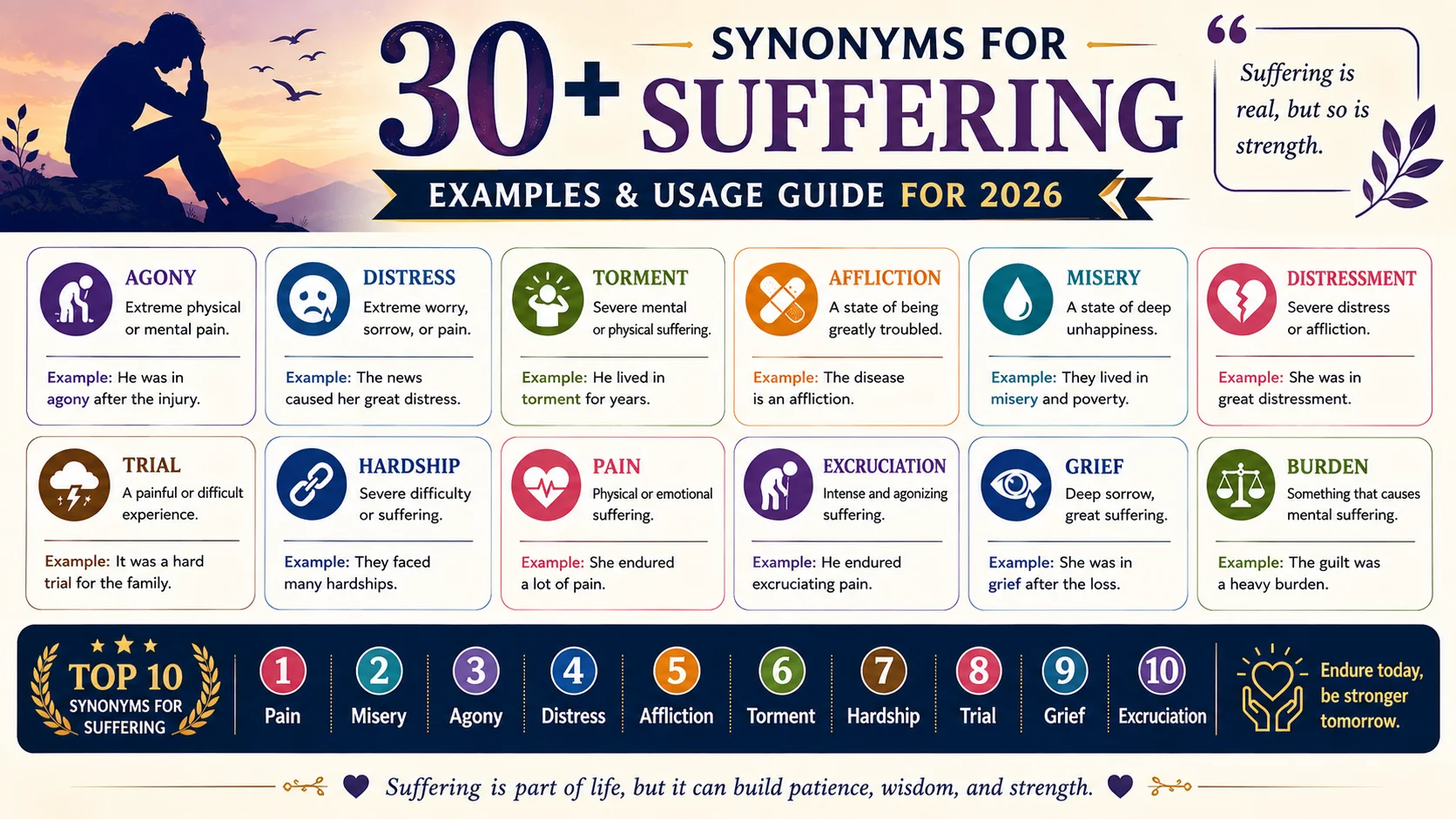
Suffering means experiencing physical or emotional pain, distress, or hardship. The best synonyms are agony for intense pain, distress for emotional hardship, torment for prolonged suffering, and hardship for difficult circumstances. Each synonym carries a slightly different intensity and works best in specific contexts.
Top 10 Synonyms for Suffering:
- Agony
- Distress
- Torment
- Hardship
- Misery
- Anguish
- Pain
- Tribulation
- Affliction
- Adversity
Every synonym has a slightly different meaning, tone, or context. Choosing the right one makes your English sound more natural and precise.
Have you ever needed to describe pain but felt that “suffering” was too general or overused?
Maybe you are writing about a character going through a difficult time. Or perhaps you need to express emotional distress in a professional or academic context. Using the same word repeatedly makes your writing lose its impact.
Learning synonyms for suffering helps you express pain, hardship, and distress with greater precision. Whether you are writing a novel, a personal essay, or a professional report, the right synonym adds depth and clarity to your message.
This guide will teach you exactly how to choose the right synonym for suffering in any context. You will learn the subtle differences between agony, distress, torment, hardship, and many other alternatives. By the end, you will express pain and hardship with confidence and variety.
What Does “Suffering” Mean?
Definition
Suffering means the experience of physical or emotional pain, distress, or hardship. It describes the state of undergoing something difficult, painful, or unpleasant. Suffering can be physical, like the pain of an injury, or emotional, like the grief of losing a loved one.
For example, a patient with a chronic illness experiences suffering. A person going through a difficult divorce experiences emotional suffering. Communities affected by natural disasters experience collective suffering. In every case, suffering involves enduring something painful or difficult.
The word carries a serious, often heavy tone. It expresses genuine pain or hardship. Using it appropriately shows sensitivity to difficult situations.
Pronunciation
| Feature | Information |
|---|---|
| US IPA | /ˈsʌfərɪŋ/ |
| UK IPA | /ˈsʌfərɪŋ/ |
| Syllables | 3 |
| Tip | Stress the first syllable: SUFF-er-ing |
Grammar
| Grammar Feature | Information |
|---|---|
| Part of Speech | Noun (also verb: suffer) |
| Common Position | Subject or object of a sentence |
| Typical Pattern | Suffering + from + noun |
Example sentences:
“The patient’s suffering was visible to everyone.”
“She experienced great suffering after the accident.”
“Many people are suffering from the effects of the pandemic.”
Grammar note: Suffering is an uncountable noun in most contexts. You can say “much suffering” but not “many sufferings” unless referring to specific instances. The verb form “suffer” is commonly used with “from” to describe the cause of pain.
Word Family
| Word | Part of Speech | Meaning |
|---|---|---|
| Suffering | Noun/Adjective | The experience of pain or hardship |
| Suffer | Verb | To experience pain or hardship |
| Sufferer | Noun | A person who experiences suffering |
| Sufferable | Adjective | Able to be endured |
| Insufferable | Adjective | Impossible to endure; unbearable |
15 Synonyms of “Suffering”
1. Agony
Meaning: Intense physical or mental pain that is difficult to bear.
Best Used For: Describing extreme pain, dramatic situations, and intense emotional experiences.
Formality: Neutral
Tone: Intense, dramatic
Frequency: ⭐⭐⭐⭐ Common
CEFR Level: B2
Example Sentence 1: “She screamed in agony when she broke her leg during the game.”
Example Sentence 2: “The family waited in agony for news about the missing child.”
Usage Tip: Agony emphasizes extreme, unbearable pain. Use it when you want to describe the most intense suffering. It works well in both physical and emotional contexts. Avoid using it for mild discomfort, as it sounds exaggerated. Native speakers often use it in dramatic storytelling and personal accounts of difficult experiences.
2. Distress
Meaning: Extreme anxiety, sorrow, or pain that causes suffering.
Best Used For: Describing emotional hardship, difficult situations, and psychological pain.
Formality: Neutral to Formal
Tone: Serious, empathetic
Frequency: ⭐⭐⭐⭐⭐ Very Common
CEFR Level: B1
Example Sentence 1: “The news of the accident caused great distress to the entire community.”
Example Sentence 2: “She was in distress after losing her job and home in the same week.”
Usage Tip: Distress emphasizes emotional suffering and anxiety. Use it when you want to describe psychological pain rather than physical pain. It is commonly used in medical, legal, and psychological contexts. Avoid using it for minor worries, as it describes significant emotional pain.
3. Torment
Meaning: Severe physical or mental suffering that continues over time.
Best Used For: Describing prolonged suffering, psychological torture, and ongoing hardship.
Formality: Neutral to Literary
Tone: Intense, dark, emotional
Frequency: ⭐⭐⭐ Moderate
CEFR Level: B2
Example Sentence 1: “The prisoner endured years of torment at the hands of his captors.”
Example Sentence 2: “She was tormented by guilt over the decision she had made.”
Usage Tip: Torment suggests suffering that is both severe and prolonged. Use it when you want to describe ongoing pain that feels inescapable. It often implies that someone or something is causing the suffering deliberately. It works well in literary and dramatic contexts.
4. Hardship
Meaning: Difficult conditions or circumstances that cause suffering.
Best Used For: Describing difficult life circumstances, economic struggles, and challenging situations.
Formality: Neutral
Tone: Empathetic, serious
Frequency: ⭐⭐⭐⭐⭐ Very Common
CEFR Level: B1
Example Sentence 1: “The family faced great hardship during the economic recession.”
Example Sentence 2: “Many immigrants endure hardship in their first years in a new country.”
Usage Tip: Hardship emphasizes difficult conditions rather than intense pain. Use it when you want to describe challenging circumstances that require endurance. It is commonly used in social, economic, and personal contexts. Avoid using it for temporary discomfort, as it implies prolonged difficulty.
5. Misery
Meaning: A state of great unhappiness and suffering.
Best Used For: Describing deep sadness, lonely situations, and emotional pain.
Formality: Neutral
Tone: Emotional, melancholic
Frequency: ⭐⭐⭐⭐⭐ Very Common
CEFR Level: B1
Example Sentence 1: “She lived in misery for years after losing her husband.”
Example Sentence 2: “The refugees endured misery and deprivation in the camps.”
Usage Tip: Misery emphasizes unhappiness and emotional suffering. Use it when you want to describe prolonged sadness or despair. It often describes situations where someone feels trapped in their suffering. Avoid using it for temporary sadness, as it implies a deeper, more lasting state of unhappiness.
6. Anguish
Meaning: Severe mental or emotional pain, often caused by grief or worry.
Best Used For: Describing intense emotional pain, grief, and heartbreak.
Formality: Neutral to Literary
Tone: Emotional, intense, poetic
Frequency: ⭐⭐⭐ Moderate
CEFR Level: B2
Example Sentence 1: “She felt anguish when she received the news of her mother’s death.”
Example Sentence 2: “He hid his anguish behind a brave smile for his children.”
Usage Tip: Anguish describes deep emotional pain, often connected to loss or grief. Use it when you want to express heartfelt sorrow. It has a literary quality and works well in creative writing. Avoid using it for everyday disappointments, as it describes profound emotional pain.
7. Pain
Meaning: Physical or emotional hurt or suffering.
Best Used For: General use, describing any type of suffering.
Formality: Neutral
Tone: Neutral to serious
Frequency: ⭐⭐⭐⭐⭐ Very Common
CEFR Level: A2
Example Sentence 1: “The pain of losing a loved one never fully goes away.”
Example Sentence 2: “He experienced great pain after the surgery.”
Usage Tip: Pain is the most general and versatile synonym for suffering. Use it in almost any context to describe physical or emotional hurt. It is simple and widely understood. However, it is also the most common word, so using more specific synonyms can make your writing more precise and interesting.
8. Tribulation
Meaning: Great trouble or suffering, often experienced over a long period.
Best Used For: Formal writing, religious contexts, and describing ongoing challenges.
Formality: Formal
Tone: Serious, spiritual, dramatic
Frequency: ⭐⭐ Rare
CEFR Level: C1
Example Sentence 1: “The nation endured many tribulations during the war years.”
Example Sentence 2: “She faced countless tribulations but never lost her faith.”
Usage Tip: Tribulation has a formal, often biblical tone. Use it when you want to describe significant, prolonged suffering. It often suggests that suffering is a test of character or faith. Avoid using it in casual conversation, where it can sound overly dramatic or old-fashioned.
9. Affliction
Meaning: A cause of suffering or pain. A condition that causes ongoing hardship.
Best Used For: Describing illness, disabilities, and persistent problems.
Formality: Formal
Tone: Serious, medical, empathetic
Frequency: ⭐⭐⭐ Moderate
CEFR Level: B2
Example Sentence 1: “Arthritis is a common affliction among elderly people.”
Example Sentence 2: “The region suffered from the affliction of poverty for generations.”
Usage Tip: Affliction emphasizes suffering caused by a specific condition or problem. Use it when you want to describe a persistent source of pain or hardship. It is commonly used in medical and social contexts. Avoid using it for temporary problems, as it suggests ongoing or chronic suffering.
10. Adversity
Meaning: Difficulties or misfortune that cause suffering.
Best Used For: Describing challenges, resilience, and overcoming hardship.
Formality: Neutral to Formal
Tone: Serious, inspiring, courageous
Frequency: ⭐⭐⭐⭐ Common
CEFR Level: B2
Example Sentence 1: “She overcame great adversity to achieve her goals.”
Example Sentence 2: “The team faced adversity but never gave up.”
Usage Tip: Adversity emphasizes difficult circumstances that test a person’s strength. Use it when you want to describe challenges that someone must overcome. It has a slightly positive undertone because it suggests resilience and strength. It works well in motivational and professional contexts.
11. Ordeal
Meaning: A difficult or painful experience that someone goes through.
Best Used For: Describing specific difficult events and challenging experiences.
Formality: Neutral
Tone: Empathetic, serious
Frequency: ⭐⭐⭐⭐ Common
CEFR Level: B2
Example Sentence 1: “The survivors of the shipwreck described their ordeal in vivid detail.”
Example Sentence 2: “Going through a divorce is an emotional ordeal for most people.”
Usage Tip: Ordeal describes a specific, often prolonged difficult experience. Use it when you want to refer to a particular event or period of suffering. It suggests that the experience was testing and demanding. Avoid using it for minor inconveniences, as it describes significant challenges.
12. Woe
Meaning: Great sorrow or distress. Deep emotional suffering.
Best Used For: Literary writing, emotional descriptions, and expressing sympathy.
Formality: Literary to Formal
Tone: Emotional, poetic, dramatic
Frequency: ⭐⭐⭐ Moderate
CEFR Level: B2
Example Sentence 1: “She poured out her heart about the woes of her difficult marriage.”
Example Sentence 2: “The poet wrote about the human condition, full of joy and woe.”
Usage Tip: Woe has an old-fashioned, poetic quality. Use it in literary writing or when you want a dramatic expression of sorrow. It is less common in everyday speech. Avoid using it in professional or academic writing where a more straightforward term like distress or hardship is more appropriate.
13. Misfortune
Meaning: Bad luck or an unlucky event that causes suffering.
Best Used For: Describing accidents, bad luck, and unforeseen difficulties.
Formality: Neutral
Tone: Empathetic, sympathetic
Frequency: ⭐⭐⭐⭐ Common
CEFR Level: B1
Example Sentence 1: “The family’s misfortune began when they lost their home in a fire.”
Example Sentence 2: “She had the misfortune of being born during a time of war.”
Usage Tip: Misfortune emphasizes bad luck rather than intentional harm. Use it when you want to describe suffering that results from chance or circumstance. It often implies sympathy for someone who did not deserve their suffering. Avoid using it when the suffering is caused by someone’s own actions.
14. Sorrow
Meaning: Deep sadness or regret caused by loss or disappointment.
Best Used For: Describing grief, regret, and emotional pain.
Formality: Neutral
Tone: Emotional, poetic, melancholic
Frequency: ⭐⭐⭐⭐ Common
CEFR Level: B1
Example Sentence 1: “She felt deep sorrow at the passing of her beloved grandmother.”
Example Sentence 2: “The whole nation shared the family’s sorrow over the tragic loss.”
Usage Tip: Sorrow emphasizes sadness and grief rather than physical pain. Use it when you want to describe emotional suffering connected to loss. It has a gentle, respectful quality. It works well in personal writing and expressions of sympathy. Avoid using it for minor disappointments, as it describes significant emotional pain.
15. Plight
Meaning: A dangerous, difficult, or unfortunate situation.
Best Used For: Describing serious circumstances and vulnerable situations.
Formality: Neutral to Formal
Tone: Empathetic, serious
Frequency: ⭐⭐⭐ Moderate
CEFR Level: B2
Example Sentence 1: “The plight of refugees fleeing war has captured global attention.”
Example Sentence 2: “He was moved by the plight of the homeless people in his city.”
Usage Tip: Plight emphasizes the circumstances causing suffering rather than the suffering itself. Use it when you want to describe a dangerous or difficult situation that someone is trapped in. It often implies that the person deserves help or sympathy. It works well in social, political, and humanitarian contexts.
Synonyms Comparison Table
| Synonym | Best Context | Formality | Tone | Frequency |
|---|---|---|---|---|
| Agony | Extreme physical or mental pain | Neutral | Intense, dramatic | ⭐⭐⭐⭐ |
| Distress | Emotional hardship | Neutral to Formal | Serious, empathetic | ⭐⭐⭐⭐⭐ |
| Torment | Prolonged suffering | Neutral to Literary | Intense, dark | ⭐⭐⭐ |
| Hardship | Difficult life circumstances | Neutral | Empathetic, serious | ⭐⭐⭐⭐⭐ |
| Misery | Deep unhappiness | Neutral | Emotional, melancholic | ⭐⭐⭐⭐⭐ |
| Anguish | Emotional pain, grief | Neutral to Literary | Emotional, intense | ⭐⭐⭐ |
| Pain | Any type of hurt | Neutral | Neutral to serious | ⭐⭐⭐⭐⭐ |
| Tribulation | Prolonged suffering | Formal | Serious, spiritual | ⭐⭐ |
| Affliction | Specific cause of suffering | Formal | Serious, medical | ⭐⭐⭐ |
| Adversity | Challenges overcome | Neutral to Formal | Serious, inspiring | ⭐⭐⭐⭐ |
| Ordeal | Specific difficult event | Neutral | Empathetic, serious | ⭐⭐⭐⭐ |
| Woe | Literary sorrow | Literary to Formal | Emotional, poetic | ⭐⭐⭐ |
| Misfortune | Bad luck | Neutral | Empathetic | ⭐⭐⭐⭐ |
| Sorrow | Grief and sadness | Neutral | Emotional, poetic | ⭐⭐⭐⭐ |
| Plight | Difficult circumstances | Neutral to Formal | Empathetic, serious | ⭐⭐⭐ |
Best Synonyms by Situation
| Situation | Best Synonym | Why It Works |
|---|---|---|
| Daily Conversation | Pain or Distress | Simple, natural, and easy to understand |
| Business Email | Hardship or Difficulty | Professional and empathetic without being overly dramatic |
| Academic Writing | Adversity or Affliction | Precise and appropriate for scholarly contexts |
| School Assignment | Pain or Hardship | Clear and appropriate for student writing |
| Professional Meeting | Adversity or Challenge | Professional and constructive |
| Presentation | Adversity or Hardship | Inspiring and motivational |
| Creative Writing | Agony or Anguish or Woe | Adds emotional depth and dramatic impact |
| Social Media | Struggle or Pain | Relatable and engaging |
| Sympathy Message | Sorrow or Distress | Compassionate and respectful |
| Humanitarian Context | Plight or Affliction | Empathetic and appropriate for serious discussions |
| Medical Context | Pain or Suffering | Clear and accurate for professional communication |
Formal vs Informal Synonyms
Formal Alternatives
| Synonym | Best Used For |
|---|---|
| Tribulation | Formal writing, religious contexts, prolonged suffering |
| Affliction | Medical writing, formal descriptions of problems |
| Adversity | Formal writing, professional contexts, motivational content |
Use formal synonyms in academic essays, professional reports, medical documents, and official communications. They add precision and sophistication to your writing. However, avoid using them in everyday conversation, where they can sound stiff and unnatural.
Neutral Alternatives
| Synonym | Best Used For |
|---|---|
| Suffering | General use, all contexts |
| Pain | General use, all contexts |
| Distress | Emotional contexts, general suffering |
| Hardship | Difficult life circumstances |
| Misery | Emotional suffering, sadness |
Neutral synonyms work in almost any situation. They are appropriate for both formal and informal contexts. Use them when you are unsure about the appropriate tone or when you want to sound natural without being too casual or too formal.
Informal Alternatives
| Synonym | Best Used For |
|---|---|
| Struggle | Casual conversation, personal experiences |
| Ordeal | Casual conversation, specific difficult events |
| Misfortune | Casual conversation, bad luck |
Use informal synonyms with friends, family, and personal conversations. They sound natural and approachable. However, avoid them in academic essays, professional reports, and formal business communication, where they can seem too casual.
Strong vs Mild Synonyms
Mild Synonyms
These synonyms describe suffering gently. They suggest difficulty without emphasizing extreme pain or intensity.
- Hardship
- Misfortune
- Struggle
- Ordeal
Use mild synonyms when you want to describe difficult circumstances without sounding overly dramatic or emotional.
Moderate Synonyms
These synonyms express significant suffering and pain. They are the most common and work in almost all situations.
- Suffering
- Pain
- Distress
- Misery
- Sorrow
- Adversity
Use moderate synonyms in most writing and conversation. They are versatile and appropriate for a wide range of contexts.
Strong Synonyms
These synonyms express intense, extreme, or profound suffering. They should be used carefully.
- Agony
- Torment
- Anguish
- Tribulation
Use strong synonyms when you want to emphasize the severity of suffering. Be careful, as they can sound dramatic or overwhelming in everyday situations.
Real-Life Examples
School Context
“Students often face hardship when balancing academics with part-time work. The adversity of long commutes and limited time can create significant distress. Many overcome these challenges through perseverance and support.”
Office Context
“Employees sometimes experience distress during major organizational changes. The team faced adversity when the company restructured. Through mutual support, we endured the ordeal and emerged stronger.”
Business Email Context
“Dear Team, I understand the hardship that these changes may bring. We will support each other through this period of transition. Please reach out if you experience any distress during this time.”
Meeting Context
“Our company has weathered significant adversity in recent years. We overcame many hardships together. This shared struggle has made us stronger and more resilient as a team.”
Creative Writing Context
“She endured years of torment after losing her child. Her anguish was visible in every weary movement. Yet even in her misery, she found moments of unexpected grace.”
Social Media Context
“This quote gave me strength during my own period of suffering. We all face adversity in different forms. Remember that hardship does not define you; how you respond to it does.”
Sympathy Message Context
“Dear Maria, I was deeply saddened to hear about your loss. I cannot imagine the sorrow you are feeling right now. Please know that my thoughts are with you during this difficult time.”
Academic Writing Context
“The study examined the plight of refugee children in war-affected regions. Researchers documented the adversities they face, including trauma, displacement, and family separation. The afflictions of war leave lasting psychological scars.”
Common Collocations
| Common Phrase | Better Alternative |
|---|---|
| Feel suffering | Feel pain or Experience distress |
| Cause suffering | Inflict pain or Cause hardship |
| Endure suffering | Endure hardship or Bear pain |
| Great suffering | Great anguish or Severe distress |
| Suffering from illness | Afflicted by illness or Suffering with illness |
| Emotional suffering | Emotional distress or Emotional pain |
| Physical suffering | Physical pain or Physical agony |
| Endless suffering | Endless torment or Unrelenting misery |
Common Phrases
1. Suffering in silence
Meaning: Experiencing pain or hardship without expressing it to others.
Example: “He suffered in silence, never telling anyone about his anxiety.”
2. Put through suffering
Meaning: To cause someone to experience pain or hardship.
Example: “The war put the entire population through immense suffering.”
3. Suffer the consequences
Meaning: To experience the negative results of something.
Example: “If you ignore the rules, you must suffer the consequences.”
4. Suffer a loss
Meaning: To experience a loss, often financial or emotional.
Example: “The company suffered a loss of $2 million last quarter.”
5. Suffer from
Meaning: To be affected by a condition or problem.
Example: “She suffers from severe headaches when she is stressed.”
6. Suffer a setback
Meaning: To experience a difficulty that slows progress.
Example: “The team suffered a setback when their star player got injured.”
7. Suffer the pain
Meaning: To endure pain or hardship.
Example: “Sometimes you must suffer the pain of rejection to find the right opportunity.”
Context Guide
| Situation | Best Synonym | Reason |
|---|---|---|
| Academic Essay | Adversity or Affliction | Precise and appropriate for scholarly contexts |
| Formal Speech | Tribulation or Adversity | Adds weight and seriousness |
| Business Email | Hardship or Difficulty | Professional and empathetic |
| Creative Writing | Agony or Anguish or Woe | Adds emotional depth and drama |
| Professional Presentation | Adversity or Challenge | Inspiring and motivational |
| Casual Conversation | Pain or Struggle | Natural and easy to understand |
| Sympathy Message | Sorrow or Distress | Compassionate and respectful |
| Humanitarian Context | Plight or Affliction | Appropriate for serious discussions |
Related Words
Near Synonyms
Near synonyms include pain, distress, hardship, and misery. These words are closely related to suffering but emphasize different aspects. Pain emphasizes the feeling itself, distress emphasizes anxiety, hardship emphasizes circumstances, and misery emphasizes unhappiness. All can replace suffering in many contexts, but each has a unique focus.
Antonyms
| Antonym | Meaning |
|---|---|
| Pleasure | A feeling of enjoyment or satisfaction |
| Joy | Intense happiness and delight |
| Comfort | A state of physical ease and freedom from pain |
| Relief | The feeling of being freed from pain or anxiety |
| Contentment | A state of happiness and satisfaction |
| Prosperity | A state of being successful and flourishing |
Related Adjectives
Painful describes something that causes suffering. Distressing describes something that causes emotional pain. Agonizing describes something that causes extreme pain. Harsh describes difficult conditions. Adverse describes unfavorable circumstances. Miserable describes a state of unhappiness.
Related Nouns
Pain is the feeling of physical or emotional hurt. Distress is extreme anxiety or pain. Hardship is difficult life circumstances. Misery is great unhappiness. Anguish is severe emotional pain. Torment is prolonged suffering. Affliction is a cause of suffering.
Related Verbs
Suffer means to experience pain or hardship. Endure means to suffer through something difficult. Bear means to tolerate pain or hardship. Withstand means to resist or endure difficult conditions. Experience means to go through something, including suffering.
Frequently Asked Questions
1. What is the best synonym for suffering in everyday conversation?
Pain is the best synonym for everyday conversation. It is simple, natural, and easy to understand. Native speakers frequently use “pain” to describe both physical and emotional suffering in casual contexts.
2. Which synonym sounds the most professional in business writing?
Hardship sounds the most professional in business writing. It is clear and appropriate for discussing difficult circumstances without being overly emotional. It works well in emails, reports, and professional communications.
3. What is the strongest synonym for suffering?
Agony is the strongest synonym for suffering. It expresses extreme, unbearable pain. Torment is also very strong and suggests prolonged suffering. Both words should be used carefully because they carry intense meanings.
4. What is the difference between suffering and hardship?
Suffering is the experience of pain or distress itself. Hardship describes the difficult circumstances that cause suffering. You experience suffering during a period of hardship. Suffering is the feeling, while hardship is the situation.
5. What is the opposite of suffering?
The opposite of suffering is pleasure, joy, or comfort. These words describe positive experiences and freedom from pain. For example, “joy” is the opposite of “suffering” because it expresses happiness rather than pain.
6. Which synonym should I use in academic writing?
In academic writing, use adversity, affliction, or tribulation. These synonyms sound precise and appropriate for scholarly contexts. For example, “The study examines the adversity faced by marginalized communities” sounds more academic than “The study examines the suffering faced by marginalized communities.”
7. What is the most common synonym for suffering in American English?
Pain is the most common synonym for suffering in American English. It appears frequently in both spoken and written contexts. Distress and hardship are also very common and widely understood.
8. What is the difference between pain and anguish?
Pain is a general term for physical or emotional hurt. Anguish is a specific type of severe emotional pain often connected to grief or loss. You experience pain from a headache but anguish from losing a loved one. Anguish is more intense and specific than general pain.
Conclusion
Suffering is a powerful word that describes pain, distress, and hardship. However, using the same word repeatedly makes your writing and speaking lose impact. The solution is simple: learn the right synonym for every situation.
For everyday conversation, choose pain or distress. For business writing, choose hardship. For emotional contexts, choose anguish or sorrow. For academic writing, choose adversity or affliction. Each synonym carries a slightly different meaning and works best in specific contexts.
Remember to consider formality, tone, and emotional intensity when choosing a synonym. A word that sounds appropriate in a novel might sound too dramatic in a professional email. Matching your word choice to the situation shows sensitivity and linguistic skill.
The next time you describe pain, hardship, or distress, pause for a moment. Consider whether agony, anguish, hardship, misery, or another synonym would serve you better. This simple habit will transform your vocabulary and make your communication more precise, empathetic, and effective.
Start using these synonyms today. Your readers and listeners will appreciate your sensitivity and clarity.
